
 FARM SOURCED · EVIDENCE EXPLAINED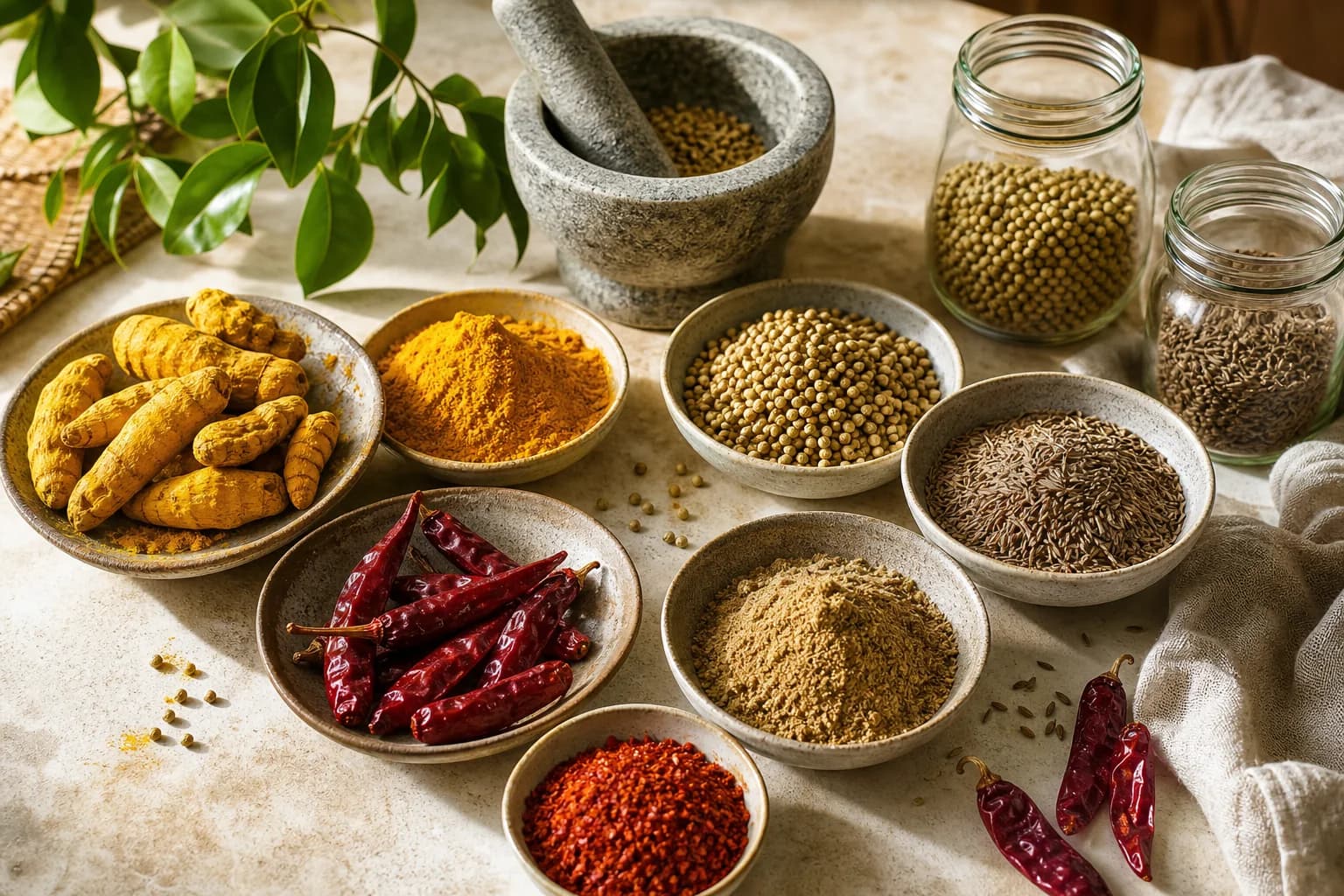
What to look for in whole and powdered spices: the short answer
Origin, cleanliness, moisture, contaminants and authenticity each need different evidence. A vivid chilli or golden turmeric can make a pantry shelf feel like a festival. Colour, however, varies with variety, origin, maturity, processing, particle size, light and storage. It can also be manipulated.
Colour is charming, but it is not a certificate
A vivid chilli or golden turmeric can make a pantry shelf feel like a festival. Colour, however, varies with variety, origin, maturity, processing, particle size, light and storage. It can also be manipulated. That makes appearance useful for noticing an obvious change, but unreliable as a solo test of freshness, strength or authenticity.
A good spice question is wonderfully specific. Are you checking cleanliness, moisture, natural colour, an undeclared filler, a contaminant or microbial safety? Each question may need a different control or method. The nose and eyes are excellent kitchen companions; they are not tiny accredited laboratories hiding on your face.
Use your senses to notice. Use validated evidence to conclude.
Whole spices let you see more
Whole cumin, coriander, pepper or dried chilli can reveal obvious foreign matter, insect activity, damage or unevenness more readily than a fine powder. Buying whole and grinding small amounts may also preserve aroma longer in some kitchens. This is a practical preference, not an automatic guarantee of purity.
Whole spices can still carry dust, mould, residues, natural toxins or sophisticated substitution that a visual check cannot establish. Source controls, hygienic processing and appropriate testing remain relevant. Choose intact packaging from a responsible food business, rather than assuming an open sack is more authentic because it looks traditional.
Powder creates convenience—and hides the original shape
Powdered spice is quick, consistent and easy to blend. Grinding also increases surface area, exposing aromatic compounds to air and making moisture control important. Once the original form disappears, the household cannot reliably judge every ingredient by sight. That is why product standards, supplier approval and risk-based analysis matter.
Check the ingredient list for blends and added ingredients. “Turmeric powder” and “turmeric masala blend” are different products. Watch for clear naming, batch details, dates, licence information and a complaint route. A brand that explains origin and publishes relevant testing is adding useful context, but one report should still be linked to the right lot.
What home tests can and cannot do
FSSAI’s DART resources compile simple awareness tests for certain common adulterants. These can help citizens understand that food fraud exists and can flag some obvious situations. They are not universal, and a home result should not be used to accuse a seller publicly without appropriate confirmation. Many contaminants and substitutions require validated laboratory methods.
Viral tricks deserve special caution. Floating, burning, rubbing or adding one household ingredient may produce a dramatic reel while ignoring natural variation and false positives. If you suspect a problem, keep the product, pack and receipt; note the batch; contact the business; and use official complaint or testing channels where needed.
Give aroma a fighting chance
Store spices tightly closed, dry and away from steam, direct light and the hottest cabinet. Do not shake a jar over a bubbling pot if that sends moisture inside. Use a dry spoon and avoid mixing a new pack into an old container before cleaning and drying it. Buy quantities that match your cooking rhythm.
Your spice shelf should be joyful, not anxious. Start with sound packaging and clear labels, enjoy the differences between varieties, and ask evidence-sized questions when a claim matters. Colour can invite you to cook; records and testing are what should carry the heavier promises.
Make a tiny spice rotation
Choose three high-use spices and write the opening month on each jar. Buy the next quantity based on how long the previous one stayed aromatic, not on the biggest discount pouch. Keep a small working jar if the bulk pack must be opened less often. This reduces exposure to steam and gives you regular chances to clean and inspect the container.
Compare whole and powder in one recipe for pleasure rather than policing. Toast and grind a little cumin or coriander, then notice aroma, texture and convenience. The lesson is not that one form wins; it is that processing changes what you can see, smell and store. That observation makes label and sourcing questions feel concrete.
If a spice seems wrong, resist the urge to post a verdict before confirmation. Record the batch, keep the sample sealed and use the manufacturer’s or official complaint route. Responsible reporting protects consumers and fair businesses alike. The brightest thing in the spice box should be the food, not the accusation.
For blends such as garam masala, sambar powder or chaat masala, the ingredient order and allergen information are especially useful. Salt, starches, seeds or other ingredients may be part of the declared recipe. Compare products by the blend they actually offer instead of expecting every regional masala to follow one imaginary formula. Diversity is delightful when the label tells the truth, the seal holds and the aroma survives until dinner. That is a spice shelf worth celebrating.
Sources and evidence
Primary material comes first. Brand standards are labelled separately from external evidence.
Tell us. Material corrections are dated and recorded, not silently overwritten.
Read our corrections policy