
 FARM SOURCED · EVIDENCE EXPLAINED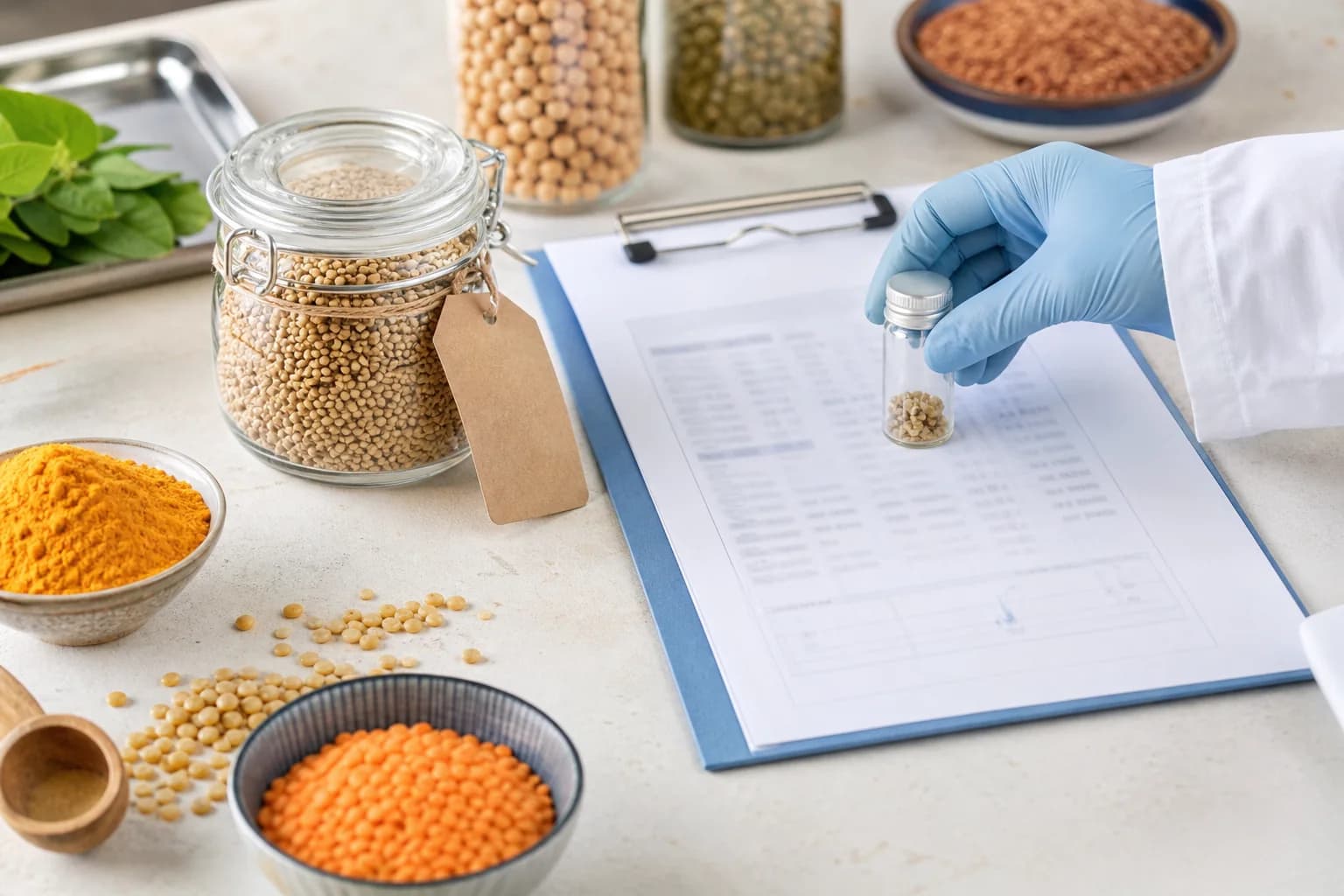
What “lab-tested” proves—and what it does not: the short answer
Testing is specific: a sample, a method, a panel and a point in time. Ask for all four. “Lab-tested” sounds reassuring because laboratories use trained people, controlled methods and specialised instruments. But the phrase is incomplete until we know what came next.
Lab-tested is the beginning of a sentence
“Lab-tested” sounds reassuring because laboratories use trained people, controlled methods and specialised instruments. But the phrase is incomplete until we know what came next. Tested for what? Which sample? By which method? When? A moisture test, pesticide-residue screen, microbiological test and authenticity examination can all be laboratory work, yet each answers a different question.
Treat the phrase as an invitation to open the notebook. A responsible publisher should identify the product or batch, the testing laboratory, the date, the named parameters and the way results were compared with a requirement. The goal is not to bury shoppers in technical pages. It is to make the headline faithful to the evidence underneath it.
Whenever you see “lab-tested”, quietly add: for what, on which sample, using which method?
The sample sets the boundary
A result describes the material submitted and tested. If a sample was drawn from a well-defined lot under a sound plan, it may be used to make a decision about that lot. If someone scooped a convenient handful from an unknown container, the instrument can still analyse it accurately, but the connection to a wider batch is weaker. Sampling is not the boring preface to testing; it is part of the result’s meaning.
Timing matters too. Agricultural ingredients, oils and spices arrive in multiple lots. A report from January does not automatically follow a product through July unless the production and sampling plan explains that connection. Look for fresh, batch-linked evidence where the claim is presented as current. Historical reports can demonstrate capability, but they should be labelled as history.
A panel is a list, not a spell
Multi-residue methods can examine many named pesticides, while other methods target metals, toxins, microbes or compositional markers. No single panel contains every possible substance or every question about a food. Even inside a panel, reporting capabilities can differ between analytes and matrices. That is why a full analyte list and method information are more useful than a badge that says “500 tests”.
Results such as “not detected” or “below quantification limit” must be read alongside the applicable reporting level. A pass may mean every reported result met a regulatory or internal criterion. It does not mean the product is nutritionally perfect, impossible to adulterate, permanently fresh or suitable for every person. Testing works best when it is allowed to be precise rather than promoted as magic.
What good transparency looks like
A helpful consumer summary can be simple: this batch was sampled on this date, tested by this laboratory for this named panel, and assessed against this stated standard. Then provide the report or a readable extract, explain unfamiliar units and include limitations. If a result does not meet the standard, publish what happens next—hold, investigation, rejection or corrective action.
As a shopper, reward specificity. A modest claim with a clear report is often more valuable than a sparkling promise with no scope. You do not need every instrument diagram before lunch. You only need the claim and the evidence to point in the same direction. That is how “lab-tested” changes from packaging confetti into something genuinely useful.
Build your own plain-language result card
A strong consumer card can fit in six lines: product and batch; sample date and sampler; laboratory and report number; named panel; method or method family; result compared with the stated limit. Add a seventh line for limitations and an eighth for action when a result fails. If a brand can complete this card for a claim, the phrase “lab-tested” has begun to earn its space.
Do not confuse accessibility with oversimplification. Readers should not need a chemistry degree, but removing units, analyte names and thresholds can change meaning. Use tooltips, glossaries and short explanations instead. “Below the laboratory’s reporting limit for this method” is both readable and more accurate than “zero chemicals”. Friendly language and scientific care are excellent roommates.
When you see new evidence, ask whether it confirms the same question or adds a different one. A pesticide panel, aflatoxin result and fatty-acid profile may all sit beside one batch, each describing a different aspect. A useful evidence page lets the cards accumulate without melting them into one giant purity score. Food is too interesting for a single green light, and testing is far more helpful when its answers stay labelled.
Independent testing is valuable, but independence should be described rather than implied. Ask who selected the sample, who paid for the analysis and whether the laboratory chose the method or followed a customer request. Payment does not invalidate a result; hidden context weakens interpretation. Clear roles let readers judge the evidence without turning ordinary commercial testing into a conspiracy or a coronation. Context makes a strong result easier to trust and much harder to oversell. That matters.
Sources and evidence
Primary material comes first. Brand standards are labelled separately from external evidence.
Tell us. Material corrections are dated and recorded, not silently overwritten.
Read our corrections policy