
 FARM SOURCED · EVIDENCE EXPLAINED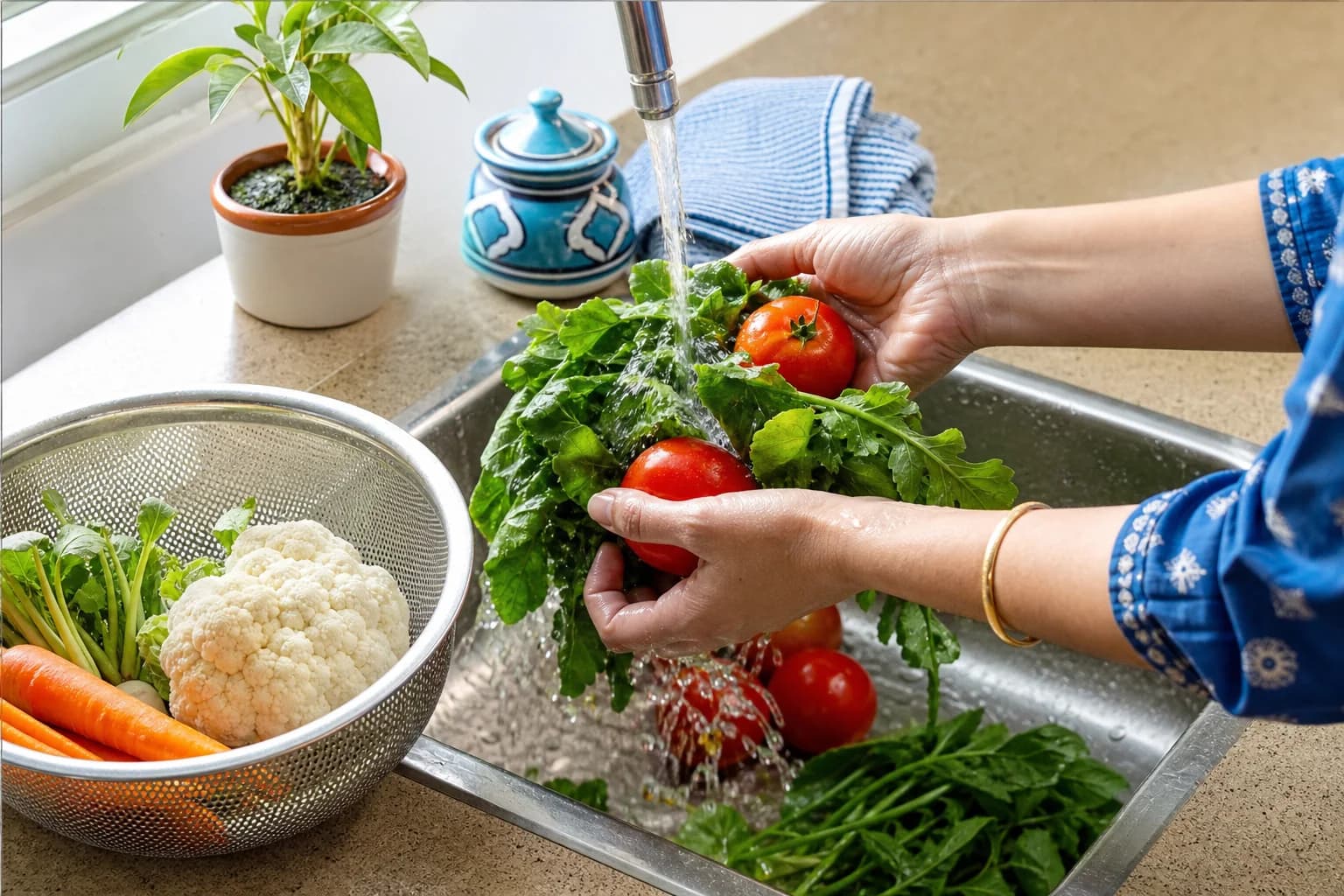
Do washing, peeling and cooking remove pesticide residues?
Washing, peeling and cooking may reduce some residues, but their effect varies by food, pesticide and method. No kitchen step certifies a crop’s history. Fresh fruit and vegetables travel through fields, containers, hands, markets and kitchens. Washing under clean running water helps remove soil and surface debris and can reduce some microorganisms.
Wash produce for several good reasons
Fresh fruit and vegetables travel through fields, containers, hands, markets and kitchens. Washing under clean running water helps remove soil and surface debris and can reduce some microorganisms. WHO also notes that washing or peeling can help consumers reduce intake of some pesticide residues. That makes washing a practical habit even when you are not thinking about a laboratory report.
The word “some” is important. Produce surfaces differ: a smooth tomato, leafy spinach and a rough cauliflower do not behave the same way. Pesticides differ too. A surface deposit may be more affected by washing than a substance that has moved into plant tissue. Time since application, weather, formulation and handling all influence the outcome.
Washing is good kitchen hygiene. It reduces certain things; it does not certify the history of the crop.
Use clean water and a little friendly friction
Wash your hands first, remove damaged portions and rinse produce under clean running water. Gently rub firm items with your hands; use a clean brush for suitable hard-skinned produce. Separate leaves where practical so water can reach trapped soil. Drain in a clean colander and keep washed food away from dirty surfaces and raw animal foods.
Do not use household soap, dishwashing liquid or bleach on food unless an authoritative instruction specifically calls for an approved food-use product and method. These products can leave unwanted residues and are not designed to turn a kitchen sink into a pesticide laboratory. Clean water, sensible handling and appropriate cooking remain the everyday foundation.
Peeling and cooking change the food too
Peeling may reduce residues concentrated on the outer surface, but it can also remove edible fibre and nutrients and does not address every substance. Decide according to the produce, dish and reliable hygiene guidance rather than peeling everything by default. Wash items before cutting or peeling so the knife does not carry surface dirt inward.
Blanching, boiling or cooking may reduce certain residues or microbes, while other compounds may behave differently. There is no universal kitchen percentage. Claims that one soak removes “all pesticides” from every food usually skip the enormous variation in chemistry and produce. If a statement sounds like it belongs on a magic sponge advertisement, ask for the study and exact conditions.
What about salt, vinegar or baking soda?
Household soaking methods are popular, and research under particular conditions may show changes for particular pesticide–produce combinations. That does not create a universal recipe. Concentration, time, temperature, pesticide, surface and measurement method matter. A viral before-and-after demonstration without a validated residue analysis cannot show what disappeared.
Long soaking can also affect texture and may spread contamination if the water or vessel is not clean. Prefer simple official food-hygiene advice for daily use. If a regulator issues a product-specific instruction during an incident, follow that instruction rather than a one-size-fits-all social post.
Keep the bigger system in view
Consumer washing sits at the final step of a much longer chain. Good agricultural practice, appropriate pesticide use, harvest intervals, market surveillance, supplier controls and residue testing do the upstream work. A family should not be asked to repair poor compliance with an elaborate bowl of kitchen chemistry.
So enjoy the easy routine: buy sound produce, keep it cool or stored as appropriate, wash it well, prevent cross-contamination and eat a varied selection. Washing is useful precisely because it is ordinary. It makes food cleaner without pretending the tap can rewrite the entire farm record—and ordinary habits are often the ones that stay.
Set up a produce routine that will actually survive Monday
Keep the routine simple enough to repeat: separate visibly damaged items, wash hands, rinse under clean running water, rub suitable surfaces, drain with clean equipment and prevent contact with dirty sinks or raw foods. Wash produce even when you plan to peel it, because cutting can transfer material from the surface to the inside.
Store before or after washing according to the produce and your household practice, taking care to avoid trapped moisture that encourages spoilage. Leafy vegetables, berries, roots and firm fruits have different storage needs. A single giant Sunday soak is not automatically better than washing correctly near use. Food hygiene works best when it fits the life of the food.
Teach children that washing is care, not fear. The carrot is not a villain and the tap is not a wizard. Farms and regulators carry upstream responsibilities; families add a sensible final step. That balanced story makes the habit easier to remember and leaves plenty of energy for the important question: what shall we cook?
Restaurants and community kitchens need the same principles at a larger scale: potable water, clean sinks and equipment, separation of dirty and ready-to-use produce, trained handlers and a workflow that prevents recontamination. More soaking tubs do not automatically mean more safety. A clear process, clean environment and timely preparation matter far more than theatrical bubbles.
Sources and evidence
Primary material comes first. Brand standards are labelled separately from external evidence.
Tell us. Material corrections are dated and recorded, not silently overwritten.
Read our corrections policy