
 FARM SOURCED · EVIDENCE EXPLAINED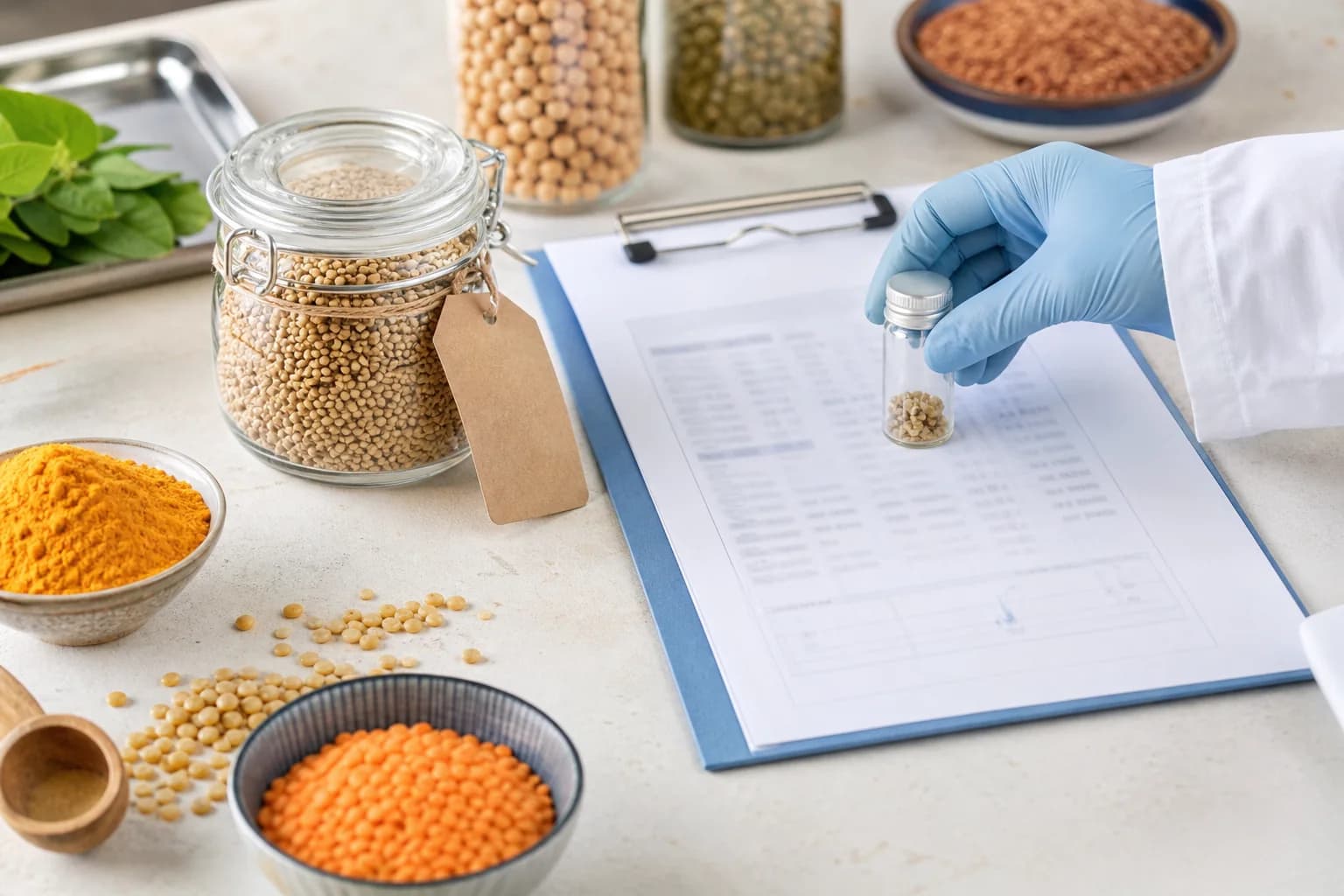
From sample to result: why chain of custody matters: the short answer
A sophisticated instrument cannot repair a sample that was mixed up, exposed or detached from its batch. A laboratory result describes the material that reached the instrument. Chain of custody is the documented path that lets a reader connect that material to the claimed field, supplier, product and batch.
The report begins before the laboratory
A laboratory result describes the material that reached the instrument. Chain of custody is the documented path that lets a reader connect that material to the claimed field, supplier, product and batch. Without it, sophisticated analysis can produce a precise answer to an uncertain question.
The chain begins with a sampling plan: what lot is being assessed, why, by whom and under which method. The sample receives a unique identity that should not depend on somebody remembering which unlabelled jar came from which sack.
At collection: identify, protect and seal
The sampler records date, place, lot, product description, sampling points and quantity. Clean, suitable tools and containers reduce contamination. The container must protect the analyte and matrix; light, oxygen, moisture or temperature may matter depending on the test.
A tamper-evident seal and signatures or equivalent controls show whether the sample changed hands intact. Photographs can support the record but do not replace the identifier and seal details.
During transport: preserve the sample condition
Time and temperature requirements should be defined before dispatch. Perishable or microbiological samples may require refrigeration and rapid delivery, while dry material needs protection from moisture and cross-contamination. The courier route should not silently become an uncontrolled storage step.
Each transfer records who released and received the sample, when, and in what condition. A deviation—broken seal, warm cooler, leaked container or unreadable label—belongs in the record even when it makes the result less convenient.
At receipt: acceptance is a technical decision
The laboratory checks identifiers, requested tests, sample amount, container, seal and condition. It records receipt time and any deviation, then assigns its own traceable laboratory number. The report should allow that number to be mapped back to the field or batch identity.
If the sample is unsuitable, rejection or qualification may be more honest than analysis. An instrument cannot reconstruct temperature history or replace material that leaked away.
After analysis: keep the result attached
The issued report should be stored with the purchase, production or aggregation record to which it belongs. Any extracted consumer summary must preserve the batch, sample, date, method, units and tested scope. Cropping the green result column away from the identity fields breaks the story at the final step.
Retained samples and disposal follow defined time, storage and legal requirements. Access controls and an audit trail reduce the chance that documents are swapped or altered.
Six questions for any published report
Who collected the sample? Which lot did it represent? How was it sealed? What conditions protected it? When did the laboratory receive it? Can the report number be linked back to the batch? If those answers are missing, the analytical values may still be technically correct for the jar—but their relevance to the pack remains uncertain.
Chain of custody is not glamorous, and that is part of its charm. It is a relay race won by labels, seals, cool boxes and signatures so that the final number knows where it came from.
Sources and evidence
Primary material comes first. Brand standards are labelled separately from external evidence.
Tell us. Material corrections are dated and recorded, not silently overwritten.
Read our corrections policy