
 FARM SOURCED · EVIDENCE EXPLAINED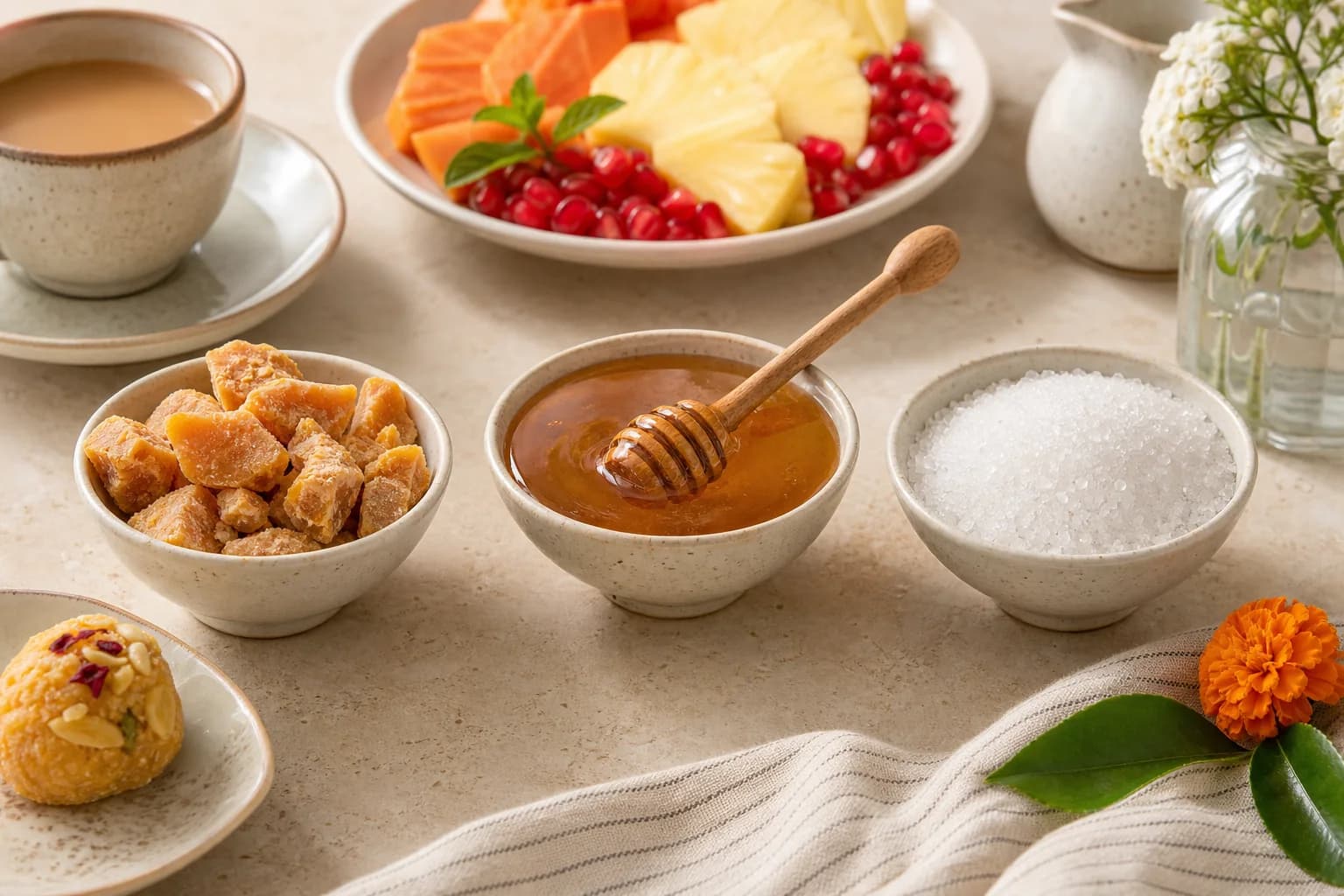
Jaggery, honey and sugar: different stories, still sweeteners: the short answer
Origin, flavour and processing differ, but a health halo does not make sweetness unlimited. White sugar, jaggery and honey look, taste and travel differently. Sugar is crystallised and refined from sugarcane or other permitted sources. Jaggery retains a distinctive colour, flavour and some non-sugar components from its less-refined process.
Jaggery brings character, not magic
Jaggery can bring deep caramel, mineral and regional notes to chikki, laddoo, tea and festive dishes. Its character depends on raw juice, clarification, concentration and storage. Quality questions can include moisture, cleanliness, permitted ingredients, contaminants and adulteration—not simply whether the block looks dark or light.
Colour varies by process and source, so visual rules circulating online can oversimplify. Buy labelled, protected food from an accountable source and check ingredients where packaged. Store jaggery dry and closed because it readily interacts with moisture. Enjoy it as jaggery, not as a medicinal tablet disguised as dessert.
Honey has a floral origin and a strict identity
Honey’s aroma and colour can vary with floral source, geography, season and handling. Crystallisation can occur naturally and is not, by itself, proof of adulteration. Likewise, a liquid appearance does not guarantee authenticity. Composition, added sugars, residues and processing questions require appropriate standards and methods.
Read the name, ingredients, batch, dates and business details. Be careful with sweeping claims about curing disease or transforming immunity. Honey should not be given to infants under twelve months because of the risk of infant botulism; families should follow authoritative health guidance. For everyone else, honey remains a sweetener with a lovely origin story, not a limitless wellness syrup.
Sugar is straightforward—and that can be useful
Plain sugar does not arrive pretending to be a forest. It supplies sweetness and energy and performs important culinary functions in texture, preservation and browning. The practical issue is quantity and frequency across tea, sweets, bakery products, drinks and packaged foods—not whether one teaspoon is morally superior to another.
Labels can help reveal added sugars in packaged foods, though ingredient names and nutrition declarations need to be read together. “No refined sugar” may still mean jaggery, honey, syrup or another added sweetening ingredient is present. The product can be delicious; the wording should not make the sweetness disappear.
Build a sweet kitchen, not a sweet myth
Choose jaggery when its flavour belongs, honey when its aroma adds something special, and sugar when its clean sweetness or culinary function suits the dish. Use measured amounts, taste before adding more and notice the many sources of sweetness across the day. Fruit and balanced meals do not need to compete in the same category as concentrated sweeteners.
Food culture has room for celebration. The happy-go-lucky answer is not to ban every laddoo or turn tea into a punishment. It is to enjoy sweetness knowingly, keep portions sensible and let each ingredient tell its real story. A modest spoon with an honest label is far more satisfying than a wellness promise piled higher than the dessert.
Try a sweetness map for one ordinary day
Without changing anything, note where concentrated sweetness appears: tea, coffee, breakfast, biscuits, drinks, sauces and dessert. The exercise is not a confession. It simply shows that small spoons can arrive through several doors. Decide which sweet moments matter most and where flavour, fruit, spices or a smaller amount would still satisfy.
Use labels to distinguish total sugars, added sugars and sweetening ingredients according to the applicable declaration. A product sweetened with dates, syrup, jaggery or honey may still contribute substantial sugars. Names change flavour and processing stories; they do not make the body misplace the sweetness.
Then keep the treats worth keeping. Make the family halwa, buy honey whose source is responsibly explained, or choose jaggery for the dish that sings with it. Moderation is not a grey waiting room outside joy. It is how sweetness stays special enough to notice—and a food enjoyed attentively rarely needs a halo at all.
When a sweetener is sold with premium origin claims, look for traceability that fits the product: floral or geographic source for honey, production region and process for jaggery, or a clearly named sugar type. Origin can add flavour, livelihood and cultural value. It does not need to borrow a medical promise to deserve appreciation, celebration or a fair price. Honest sweetness is plenty indeed.
Sources and evidence
Primary material comes first. Brand standards are labelled separately from external evidence.
Tell us. Material corrections are dated and recorded, not silently overwritten.
Read our corrections policy