
 FARM SOURCED · EVIDENCE EXPLAINED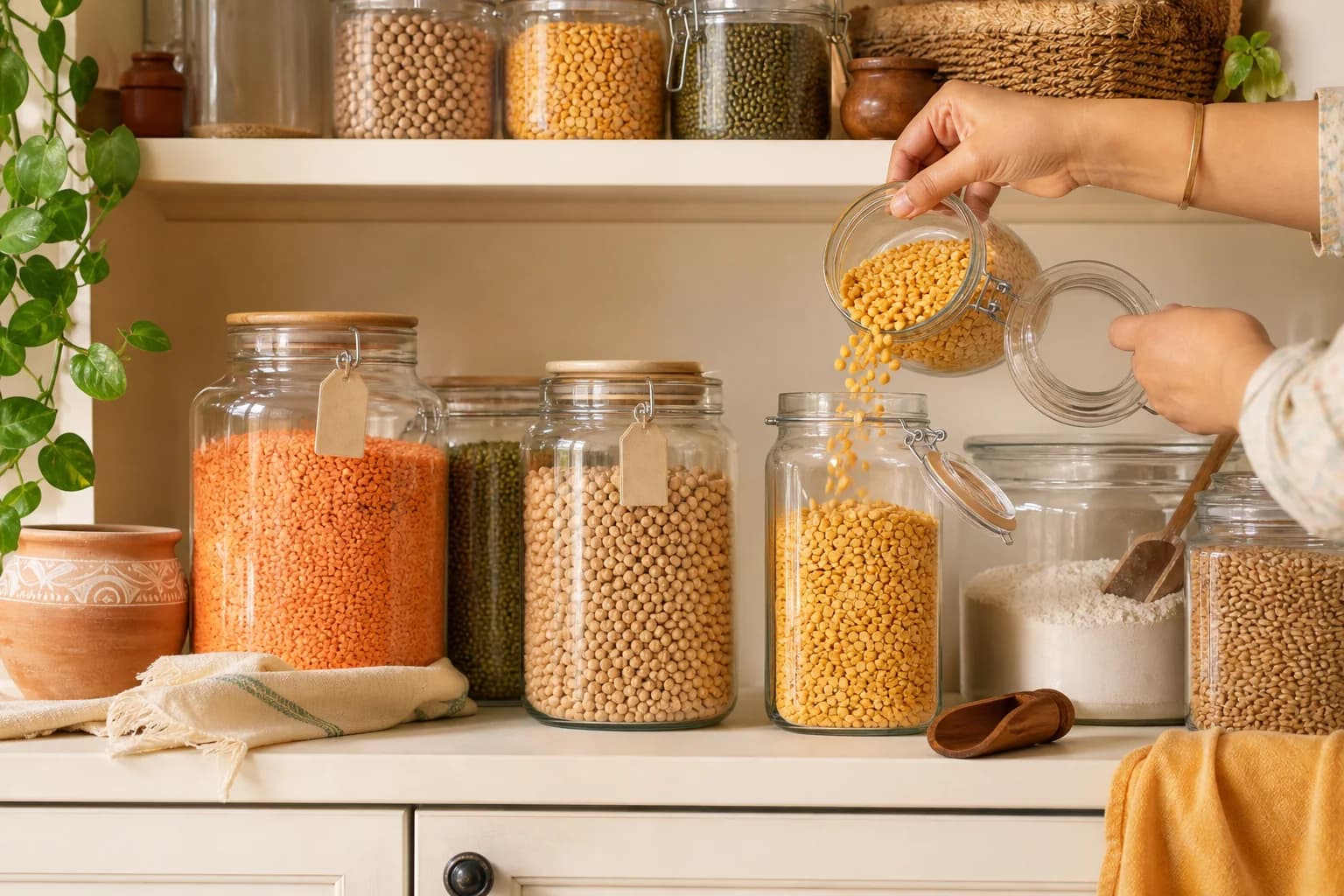
Dal in the pantry: freshness, insects, moisture and mould: the short answer
A clean, dry container and sensible stock rotation solve more pantry problems than folklore ever will. Pulses are wonderfully practical pantry citizens. Their low moisture supports a long shelf life, but storage conditions still matter. Heat, humidity, insects, rodents, damaged packaging and time can reduce quality or make food unsuitable.
Dal is dry, but it is not invincible
Pulses are wonderfully practical pantry citizens. Their low moisture supports a long shelf life, but storage conditions still matter. Heat, humidity, insects, rodents, damaged packaging and time can reduce quality or make food unsuitable. Whole and split pulses also behave differently, and older stock may take longer to cook even when it remains otherwise acceptable.
Begin with a sound pack or clean loose-food source. Look for the product name, batch, dates and storage advice where packaged. Avoid buying damp, visibly mouldy or heavily infested material. A few minutes of attention at purchase is easier than negotiating with an adventurous weevil colony later.
Dry food lasts well because it stays dry. Moisture is the uninvited guest to keep outside.
Set up the container before the dal arrives
Use a food-grade container that is clean, completely dry and easy to close. If you are refilling, empty the old stock first rather than pouring new dal over it. Wash and dry the container thoroughly when needed. This prevents old fragments, moisture or insects from being buried under a fresh layer.
Keep the container off a damp floor and away from the sink, steam and direct sunlight. A cool, dry cupboard is usually happier than the ledge above a hot appliance. Label the jar with the purchase or opening date if your household decants several similar dals. Tiny labels save surprisingly large mysteries.
Understand insects without panicking
Stored-grain insects can arrive through the supply chain or move between pantry products. Adults, larvae, webbing, powdery residues or damaged grains can signal infestation. Isolate the affected container and inspect nearby dry foods. Clean shelves and crevices carefully so the problem does not simply change addresses.
Household practices such as freezing newly purchased dry goods are sometimes used for insect management, but time and temperature must be appropriate, and the product should stay sealed while returning to room temperature to avoid condensation. When in doubt, follow reliable local guidance. Do not apply agricultural or household insecticides directly to food.
Know when moisture changes the decision
A musty odour, visible mould, clumping from dampness, unusual discoloration or water exposure is different from finding one intact dry pulse that looks slightly varied. Mould can produce hazards that are not reliably removed by washing or cooking. If food is visibly mouldy or smells strongly musty, the sensible choice is to discard it rather than rescue it with extra masala.
Do not taste suspicious dry food to decide whether it is safe. If a sealed pack is affected before its date, photograph the condition, preserve the batch details and contact the seller or manufacturer. Specific feedback can help identify a storage or packaging problem.
Cook, cool and store with the same care
Sort pulses, remove foreign matter and rinse with clean water before cooking. Follow soaking and cooking practices suitable for the pulse and recipe. Once cooked, dal becomes a moist, perishable food. Serve it promptly, refrigerate leftovers without a long warm wait and reheat appropriately rather than treating the cooked pot like the dry pantry jar.
Buy quantities that match your household, use older sound stock first and let the container empty occasionally. The goal is not a showroom pantry with twenty kilograms of colour-coded legumes. It is a lively rotation of delicious dals that move from dry jar to bubbling pot before insects, humidity or forgetfulness get invited to dinner.
Give every jar a calm monthly hello
Once a month, look across dry staples before shopping. Check lids, corners and shelves for insects, spills or moisture. Move older sound stock forward and write a meal plan that uses it. This five-minute hello prevents the archaeological layer of chana dal that otherwise waits behind a new packet for several governments.
Do not confuse cosmetic variation with spoilage. Pulses naturally differ in size and shade, and split surfaces can look powdery from handling. Compare with the product’s normal appearance and focus on stronger warning signs such as live infestation, webbing, wet clumps, mould or a musty odour. If uncertain, seek reliable guidance rather than tasting a suspicious sample.
A well-run pantry makes meals easier. When jars are labelled, dry and rotating, dal can move quickly into khichdi, sambar, cheela, soups and salads. Storage knowledge should create more cooking, not more fear. The reward for a boring cupboard is a wonderfully lively pot.
If you share staples with neighbours or buy through a group, keep the original batch and supplier information with each divided portion. Clean, dry containers and simple labels preserve more than neatness; they keep questions answerable. Community buying can reduce cost and packaging, and a tiny paper label ensures the saving does not accidentally discard the product’s identity. It also makes fair stock rotation easier for everyone. Shared dal deserves shared clarity.
Sources and evidence
Primary material comes first. Brand standards are labelled separately from external evidence.
Tell us. Material corrections are dated and recorded, not silently overwritten.
Read our corrections policy