
 FARM SOURCED · EVIDENCE EXPLAINED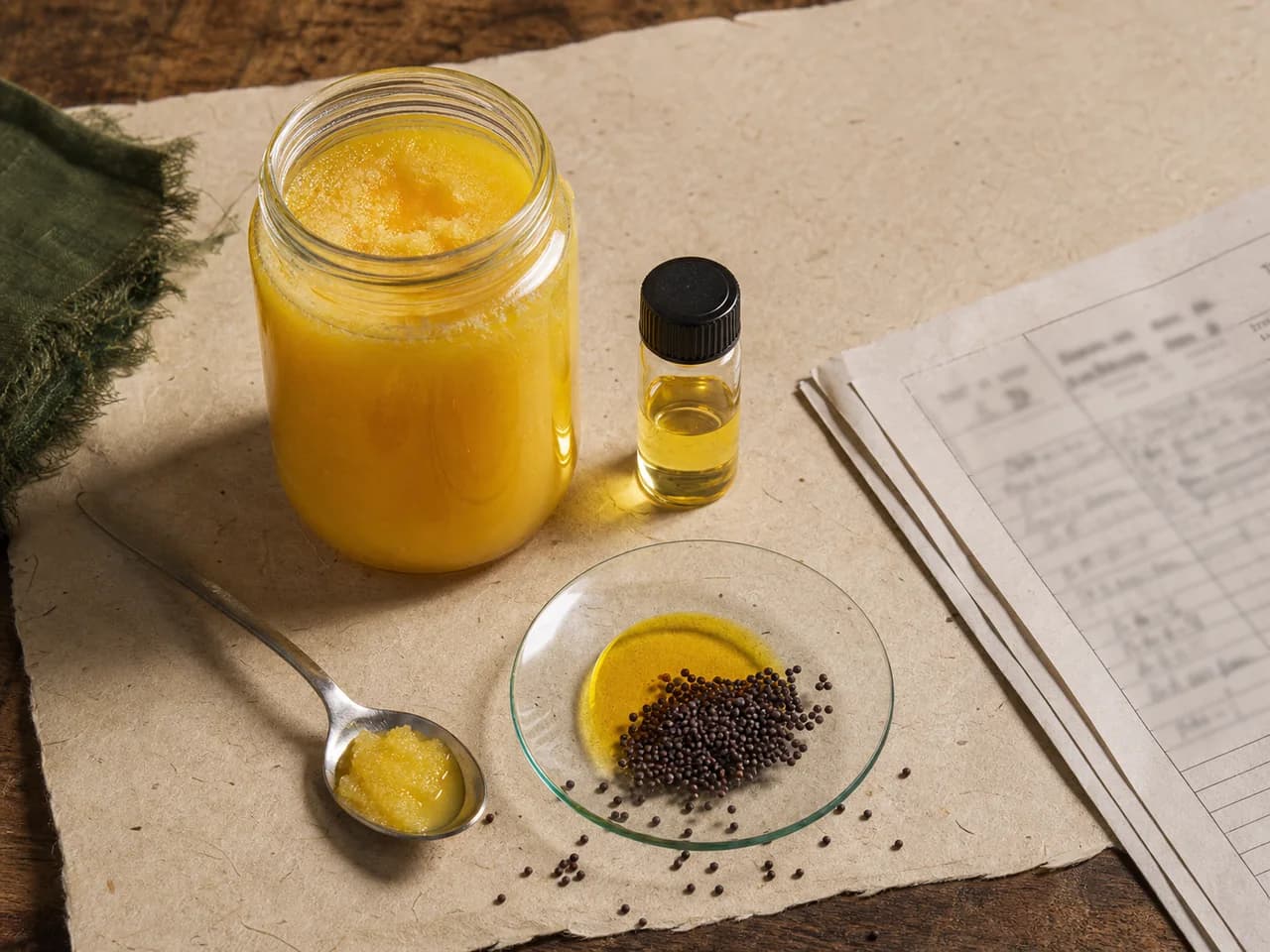
Why ghee adulteration keeps returning to the headlines: the short answer
The forms change—from substitution to mislabelling—but the consumer problem is consistent: the contents are difficult to judge by sight alone. Ghee is a high-value food whose identity depends largely on its milk-fat composition. It is also processed, uniform-looking and familiar in aroma and texture.
Why the same category problem keeps returning
Ghee is a high-value food whose identity depends largely on its milk-fat composition. It is also processed, uniform-looking and familiar in aroma and texture. Those qualities make it loved in kitchens, but they also make substitution difficult to judge by sight. A cheaper fat can sometimes be blended into a product that still looks golden and behaves plausibly in a warm pan.
That economic gap explains why ghee appears repeatedly in official surveillance and festive anti-adulteration drives. It does not mean every producer is suspect. It means the category deserves controls that work even when a jar looks, smells and tastes reassuring. The useful story is therefore not a parade of scary headlines; it is the difference between an impression and a documented identity.
A recurring category risk is a reason for better records and testing—not a reason to accuse every producer.
What the standard is trying to protect
Food standards describe ghee through compositional and quality requirements. They provide reference points for milk fat, moisture and analytical characteristics. A laboratory does not decide that a product is ghee because it is yellow or because it sets at room temperature. It examines measurements that help distinguish milk fat from unexpected vegetable or animal fats and assess whether the sample meets applicable requirements.
No single number carries the entire verdict. Authenticity work can draw on a pattern of measurements, and the relevant method must be suitable for the suspected substitution. FSSAI publishes product standards as well as official methods, including methods aimed at detecting vegetable oil in ghee. This is why a serious report names its method and result instead of simply stamping the word “pure”.
Adulteration is not one trick
Substitution can take different forms: blending with a less expensive fat, adding material that changes body or colour, misdescribing a product made with another fat, or presenting a mixture as ghee. These are not interchangeable findings. A test for starch cannot answer a question about vegetable oil, and a colour test cannot establish the complete fatty-acid identity of a sample.
The distinction matters when news travels quickly. A failed parameter should be reported by its actual name, with the sample identity and authority behind it. “Adulterated” is a regulatory conclusion with consequences; it should not be reconstructed from an unverified kitchen video or a photograph of a spoon.
Why home tests have limits
FSSAI’s DART materials can help people demonstrate certain forms of adulteration and understand why everyday observation has limits. They are useful awareness tools. They are not a replacement for official sampling, chain of custody, validated laboratory analysis and regulatory interpretation. Temperature, storage, feed, season and processing can all influence sensory behaviour without proving fraud.
The famous grainy-versus-smooth, melting-speed and palm-temperature tests are especially easy to overread. A home observation may generate a question; it cannot reliably identify every possible foreign fat or establish legal non-compliance. If the result matters, the sample, method and comparison point must be documented.
What a credible producer should be able to show
A strong evidence trail begins before the finished jar. It links milk or butter-fat suppliers to inward records, defines production lots, records process and cleaning controls, assigns batch codes, retains samples where appropriate and specifies the testing plan. The finished report should identify the batch and the laboratory, and it should explain which questions were tested rather than letting one report imply universal purity.
When a result falls outside the specification, the batch should be held while the cause is investigated. Retesting rules, product disposition and supplier action should already exist in the standard. Proof is most trustworthy when the failure route is as clear as the pass route.
A calm consumer checklist
Check the FSSAI licence details, sealed packaging, batch code, date information and complaint contact. Be cautious with a price that appears implausibly low for the stated source and process, while remembering that price alone proves nothing. If a brand publishes a report, match the product and batch, then look for the sample description, test method, units and date.
Finally, keep the claim in proportion. A compliant test is useful evidence for the parameters measured in that sample. It is not a halo around every claim on the label. The happy ending is not learning to perform forensic chemistry beside the stove; it is being able to ask a precise question and receive a precise answer.
Sources and evidence
Primary material comes first. Brand standards are labelled separately from external evidence.
Tell us. Material corrections are dated and recorded, not silently overwritten.
Read our corrections policy