
 FARM SOURCED · EVIDENCE EXPLAINED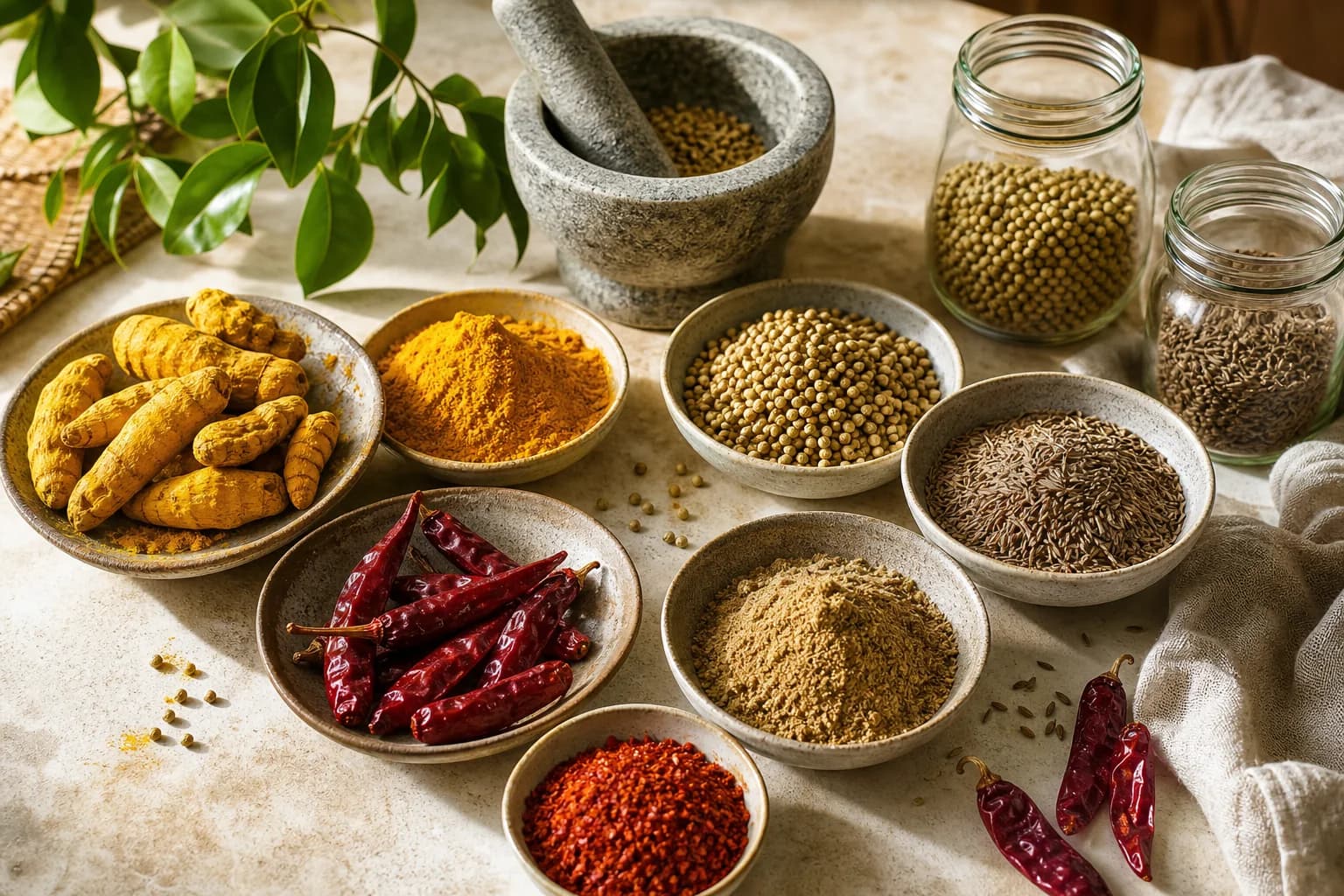
When colour makes a spice look better than it is: the short answer
Appearance can be manipulated. Learn why source controls, compositional tests and contaminant screening answer different questions. Colour is one of the first things shoppers notice in a spice, which makes it a tempting shortcut for both buyers and dishonest sellers.
The bright-colour trap
Colour is one of the first things shoppers notice in a spice, which makes it a tempting shortcut for both buyers and dishonest sellers. Deep red chilli or brilliant yellow turmeric can look fresh and powerful. Yet intensity varies with variety, growing conditions, drying, age, grinding and light. It cannot, by itself, prove identity or quality.
Appearance can also be manipulated. Powder may be bulked with cheaper plant material or starch, coloured to resemble the expected spice, or contaminated through poor drying and storage. Those are different failures. A careful investigation asks which one is suspected before choosing a test.
A beautiful colour can begin a recipe. It cannot finish an authenticity assessment.
Adulterant, contaminant and defect are not synonyms
An adulterant is material added, substituted or removed in a deceptive or non-compliant way. A contaminant may enter through cultivation, processing, storage or the environment without being deliberately added. A defect such as insect damage or excess extraneous matter may indicate handling quality. Each category has its own evidence.
This distinction keeps public claims accurate. Finding an unauthorised dye is not the same as finding a mycotoxin, and neither is the same as measuring moisture above a standard. The headline should identify the result instead of flattening every failure into “fake masala”.
Why whole spices reveal more—but not everything
Whole spices allow a buyer or processor to inspect shape, cleanliness, insects and obvious foreign matter before grinding. Their identity is generally harder to imitate than a fine powder. That is a practical advantage, not a guarantee. Residues, toxins, microbial hazards and some substitutions still require appropriate sampling and analysis.
Powdering increases surface area and removes visible structure, so supplier controls and lot identity become especially important. A processor should know the source, inspect incoming material, control cleaning and grinding, prevent cross-contact and retain the batch relationship through packing.
Testing must match the question
FSSAI publishes manuals and DART awareness resources covering selected adulterants in spices. A quick screen for artificial colour or starch may be useful, while formal compliance relies on recognised methods, representative samples and competent laboratories. “Lab-tested masala” is incomplete unless the tested panel is named.
Sampling deserves equal attention because a sack or production lot may not be uniform. Taking powder from the easiest top corner can miss pockets of foreign material or contamination. The plan should define the lot, locations, increments, composite procedure and sample protection.
A buying and storage checklist
Prefer intact packs from a traceable source, with an FSSAI licence, batch, date information and complaint contact. Buy a quantity your household can use while the aroma is still lively. At home, keep spices dry, closed and away from heat and strong light; use clean, dry spoons and do not pour a new pack onto an old residue without cleaning the jar.
If a spice looks unexpectedly fluorescent, contains visible grit, smells musty or behaves strangely, stop using it and preserve the pack information. A home check may help describe the concern, but a laboratory and authority should make the formal finding.
What good transparency looks like
A credible spice story connects origin and supplier approval to cleaning, grinding, contaminant controls and batch-specific evidence. It also states limitations: a pesticide-residue panel does not establish the absence of every dye, and a compositional test does not replace hygiene controls.
The goal is not to make every cook suspicious of colour. It is to let colour return to its proper job—making lunch joyful—while records and methods quietly handle the proof.
Sources and evidence
Primary material comes first. Brand standards are labelled separately from external evidence.
Tell us. Material corrections are dated and recorded, not silently overwritten.
Read our corrections policy