
 FARM SOURCED · EVIDENCE EXPLAINED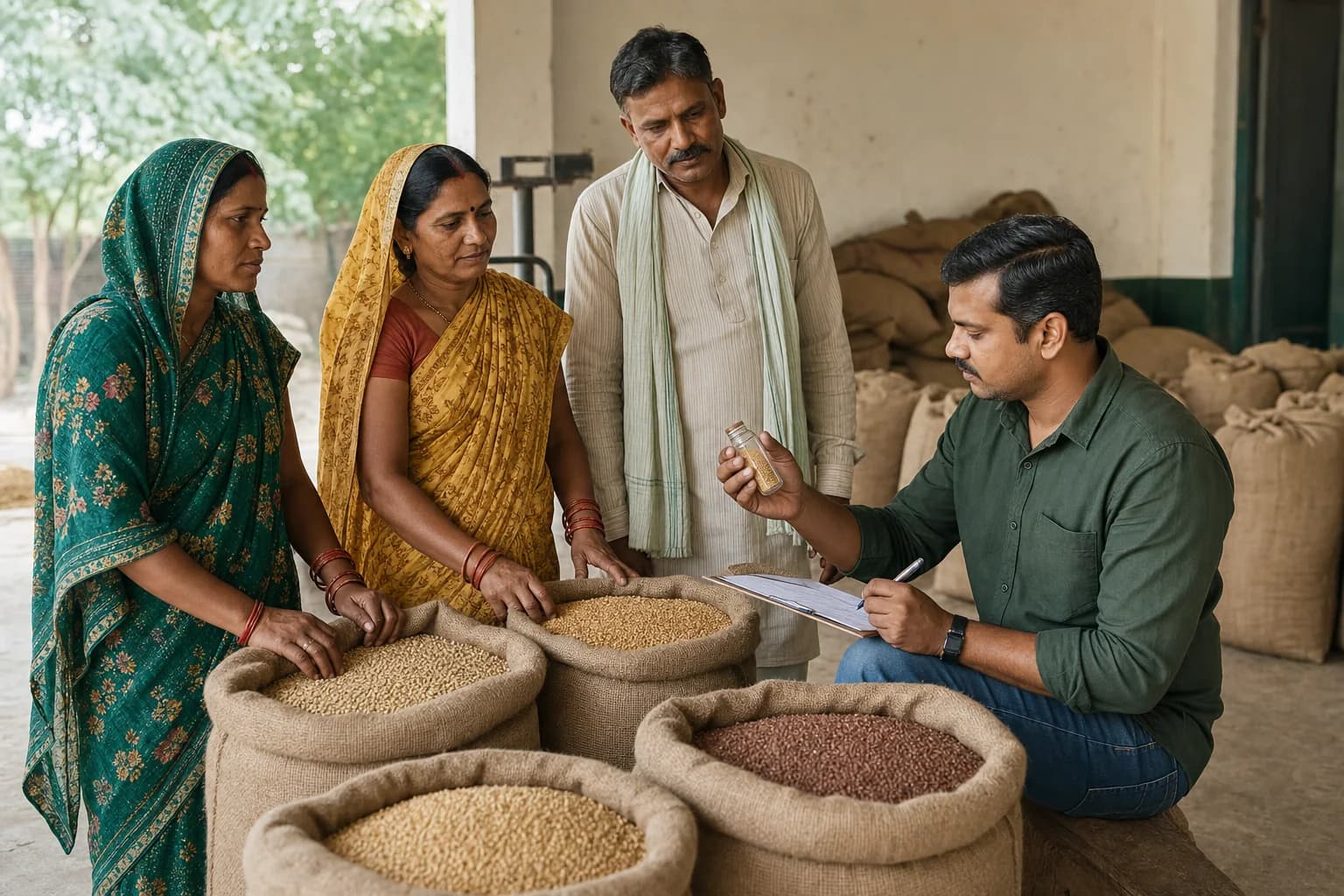
How an FPO changes the economics of testing: the short answer
Collective aggregation can make training, records, sampling and market access more practical—but it does not remove the need for controls. Laboratory testing has costs that do not shrink neatly with a farmer’s acreage: travel, sampling materials, courier conditions, laboratory minimum charges and the time needed to interpret a report.
The fixed-cost problem behind one small lot
Laboratory testing has costs that do not shrink neatly with a farmer’s acreage: travel, sampling materials, courier conditions, laboratory minimum charges and the time needed to interpret a report. For one small, poorly defined lot, those costs can overwhelm the value of the crop.
A Farmer Producer Organisation can create a shared operating layer. It can organise members, define collection points, negotiate services and aggregate produce into economically workable lots. Aggregation helps only when identity is preserved; a large anonymous heap may be cheaper to test but impossible to trace.
The economic advantage comes from coordination. The evidence advantage comes from disciplined lot identity.
Aggregation must follow rules
Before collection, the FPO needs an agreed specification: eligible crop and geography, harvest window, moisture or cleanliness expectations, prohibited practices, records required and what happens when material does not qualify. Members should know the rule before a truck arrives.
At intake, farmer, plot or source group, quantity, date and preliminary checks can be recorded. Bags or bins need unique identifiers. If compatible member lots are combined, the aggregation record should show exactly which inputs formed the new lot. This is the bridge between a test report and the people whose produce it represents.
Sampling is where economics meets statistics
A laboratory analyses the material it receives, not the entire warehouse by magic. The sampling plan defines the lot, locations and number of increments, how a composite is made, the sample quantity, container, seal and selection responsibility. Codex guidance emphasises fair, valid and fit-for-purpose sampling plans.
An FPO can make professional sampling practical by scheduling lots, maintaining a clean space, training authorised people and sending several planned samples in one logistics run. It should not allow the commercial buyer alone to pick a convenient handful from the top.
What happens when one result fails
The governance test begins when the report is uncomfortable. The affected lot should remain identifiable and held. The organisation must decide whether the issue points to one member lot, an aggregation error, storage, sampling or a broader practice. Retesting should follow a written rule rather than becoming a search for a friendlier number.
Members need a fair appeal and investigation process, but the standard must protect the approved stream. Clear responsibility, retained counter-samples where appropriate, documented disposition and corrective action keep a collective system from socialising the risk while privatising the reward.
Questions to ask before calling it success
Who owns the data? Can a member see the result for their lot? How are testing costs allocated? Who selects the laboratory and sampler? What is the conflict process? Are rejected lots tracked to a safe and lawful disposition? Does the premium, if any, reach members transparently?
A cooperative logo does not answer those questions automatically. Good governance does. When the answers are visible, collective testing can shift from an expensive certificate hunt to a practical operating system—and everyone knows which bag the celebration belongs to.
Sources and evidence
Primary material comes first. Brand standards are labelled separately from external evidence.
Tell us. Material corrections are dated and recorded, not silently overwritten.
Read our corrections policy