
 FARM SOURCED · EVIDENCE EXPLAINED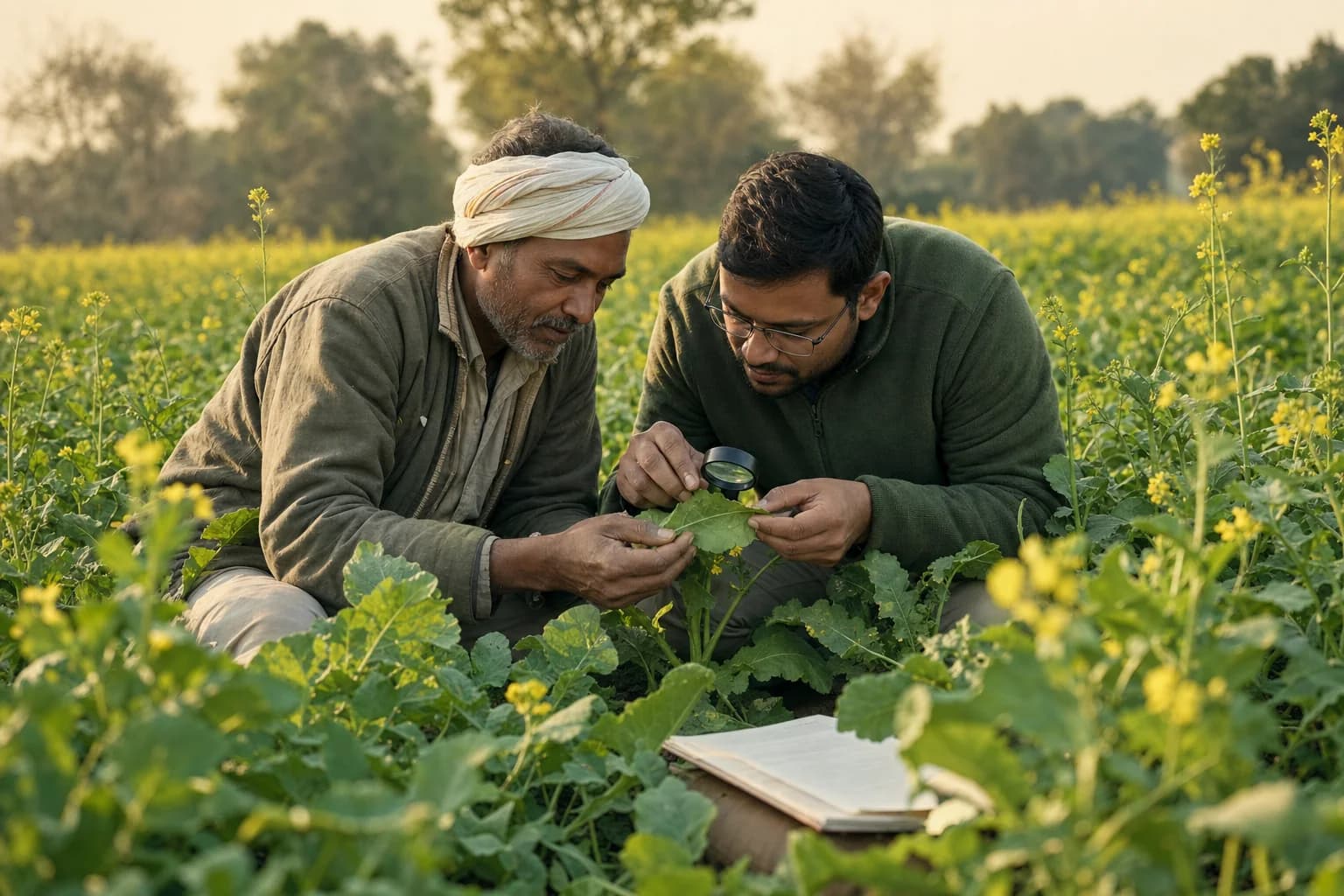
Changing a pest-management practice without gambling a harvest: the short answer
Adoption is rarely a switch. It is a managed series of trials, observations, costs and safeguards. Pests can take away a season’s income, so asking a farmer to abandon a familiar practice is not a small lifestyle suggestion. The downside arrives on one field and one household balance sheet.
Why a switch can feel like a gamble
Pests can take away a season’s income, so asking a farmer to abandon a familiar practice is not a small lifestyle suggestion. The downside arrives on one field and one household balance sheet. A credible transition begins by respecting that risk rather than promising that a new input or no-input slogan will solve every problem.
Integrated pest management offers a better frame. FAO describes IPM as a decision process combining biological, cultural, physical and, when needed, chemical strategies to grow a healthy crop while minimising disruption and pesticide risk. It is not a sealed package handed down from a poster.
A safer transition replaces blind routine with observation—not one form of certainty with another.
Build a baseline before changing the practice
Record the crop, variety, sowing date, previous crop, known pest history, usual intervention, labour, cost and past outcome. During the season, scouting notes should distinguish pest presence from crop damage and include crop stage and weather. Beneficial insects and disease symptoms belong in the same view.
Without a baseline, a good year can make any method look brilliant and a difficult year can make it look useless. Comparison is not perfect on a working farm, but consistent notes are better than memory edited by the harvest price.
Trial at a scale the household can carry
A bounded plot, paired strip or small group demonstration can test a new practice without staking the entire harvest. The comparison should be agreed in advance: what will be applied, when, what observations will trigger action, and which outcomes matter. Yield alone may miss labour, input cost, crop quality and timing.
A trial is not permission to improvise unsafe mixtures or ignore labels. Any permitted plant-protection product must be appropriate for the crop and pest and used according to applicable directions, protective measures and harvest interval. “Natural” is not a safety protocol.
Make observation a scheduled job
Farmer Field Schools use regular field observation, discussion and small experiments to strengthen local decision-making. That rhythm matters. Scouting only after damage becomes dramatic turns IPM into emergency response. A simple weekly route through marked points can reveal changes earlier.
The record can stay practical: date, location, crop stage, pest or symptom, approximate level, beneficial activity, weather, action and follow-up. Photographs help when they keep the same plot identity and scale. An adviser’s recommendation should be attached to the observation that prompted it.
Decide what would justify scaling
Before the trial, define success and stop rules. Scaling may require acceptable crop protection, manageable labour, affordable inputs, no new safety issue and results that repeat across more than one observation. A method that works only with continuous expert supervision may need a different support model before expansion.
Failure should produce a lesson, not a hidden plot. Was the diagnosis wrong, the timing late, the material poor, the weather unusual or the practice unsuitable? Publishing uncertainty is more useful than announcing a transformation after one photogenic row.
Connect practice records to the food claim
A farming-practice record shows what was done. A residue test shows what a defined method measured in a sample. Neither replaces the other. A credible lower-pesticide or pesticide-free programme states its input rules, verification method, exception process and testing scope without pretending that one green tick proves the whole season.
The farmer should receive the findings and the economic story, not only the brand. A transition becomes durable when field knowledge, risk and reward travel together. Then the change feels less like gambling a harvest and more like learning with the field.
Sources and evidence
Primary material comes first. Brand standards are labelled separately from external evidence.
Tell us. Material corrections are dated and recorded, not silently overwritten.
Read our corrections policy