
 FARM SOURCED · EVIDENCE EXPLAINED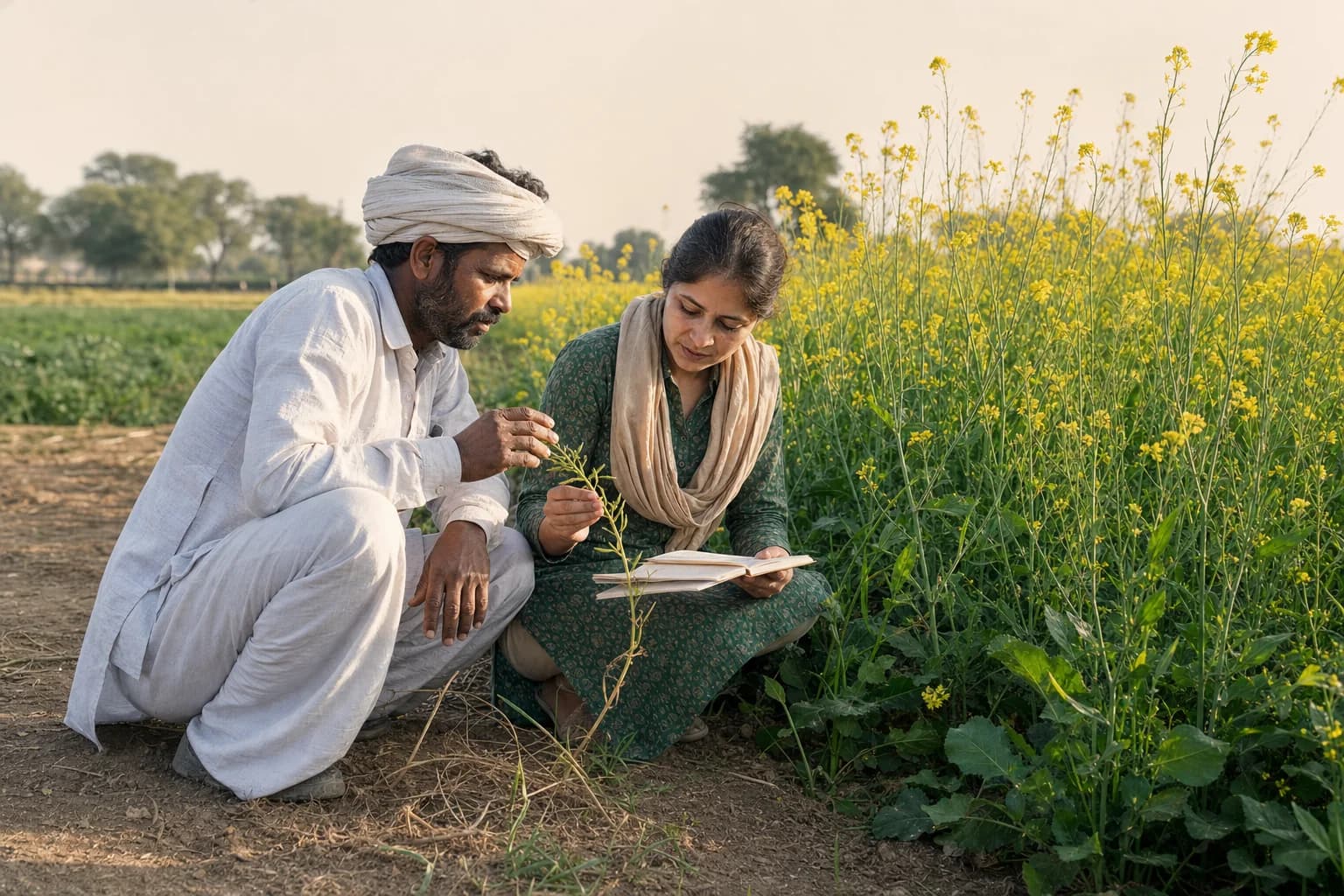
A season of mustard, one decision at a time: the short answer
From soil preparation to pest pressure, a crop is a sequence of decisions—not a pastoral photograph. This is an evidence-based seasonal walkthrough built from public agronomy guidance for Rajasthan and rapeseed-mustard. It is not presented as the diary of a named farmer.
How to read this field note
This is an evidence-based seasonal walkthrough built from public agronomy guidance for Rajasthan and rapeseed-mustard. It is not presented as the diary of a named farmer. Names, quotations, yields and income changes will appear on Zaivik only when a participant has consented and the underlying field record has been checked.
That boundary does not make the story empty. It lets us show the real sequence of decisions without borrowing someone’s face or inventing a triumphant harvest. A mustard season is a chain of choices made under weather, water, pest and cash constraints.
Illustrative field journey—no farmer identity or outcome is being claimed.
Before sowing: begin with the field, not the packet
Rajasthan’s conditions vary widely, and much cultivated land is rainfed. A sensible starting record describes the plot, previous crop, available moisture, irrigation access and soil-test information. ICAR advisories emphasise conserving residual monsoon moisture and using soil results to guide nutrient decisions rather than treating one fertiliser recipe as universal.
Seed choice belongs in the same notebook. Variety suitability, seed source, expected duration and local recommendations affect the rest of the season. A traceable seed lot and sowing date may look like administrative details in October; by harvest, they are the spine of the story.
Establishment: small observations, early consequences
After sowing, the questions become wonderfully ordinary: did the crop emerge evenly, where are the gaps, is surface moisture holding, and are weeds getting ahead? A field note records observations before an intervention, not only after. Photographs should include date and plot identity so they do not become generic green wallpaper.
If advice is given, the record should name who gave it, what evidence they used and what the farmer decided. The farmer may choose differently because labour, water or cash is limited. That decision is part of the evidence, not an inconvenience to be edited out.
Pest pressure: observe before escalating
Mustard can face insect and disease pressure, including aphids and foliar diseases in relevant regions. Integrated pest management is a decision process: observe the crop and pest, recognise beneficial organisms, consider weather and crop stage, then choose an appropriate combination of cultural, biological, physical or chemical measures.
A credible low-residue journey does not claim that pests politely disappeared. It records scouting dates, affected area, advice, product and dose where an input was used, pre-harvest interval and the next observation. If a proposed practice is new, a bounded trial is often safer than an abrupt whole-farm switch.
Flowering to harvest: protect both crop and identity
As the crop flowers and pods develop, irrigation and protection decisions become time-sensitive. The notebook should also prepare for harvest: which plot will become which lot, how equipment will be cleaned, where seed will dry, and how bags will be labelled. Traceability can be lost in a single mixed heap.
Yield is only one outcome. Moisture, visible quality, rejection, input cost, labour, test result and selling route affect the season’s economics. Reporting only the best quintal figure would turn a decision story back into a postcard.
What the completed named story must contain
When Zaivik publishes a named field story, it should include consent scope, location precision agreed with the farmer, season dates, plot or lot basis, important interventions, setbacks, costs that can be responsibly verified and the route from harvest to sampled batch. Quotes should come from the participant, not from a brand script.
Until then, this walkthrough remains useful as a checklist. It reminds us that cleaner food is not created by changing one label at the end. It is built through dozens of recorded decisions—and, ideally, celebrated with a cup of tea when the last bag is safely marked.
Sources and evidence
Primary material comes first. Brand standards are labelled separately from external evidence.
Tell us. Material corrections are dated and recorded, not silently overwritten.
Read our corrections policy